
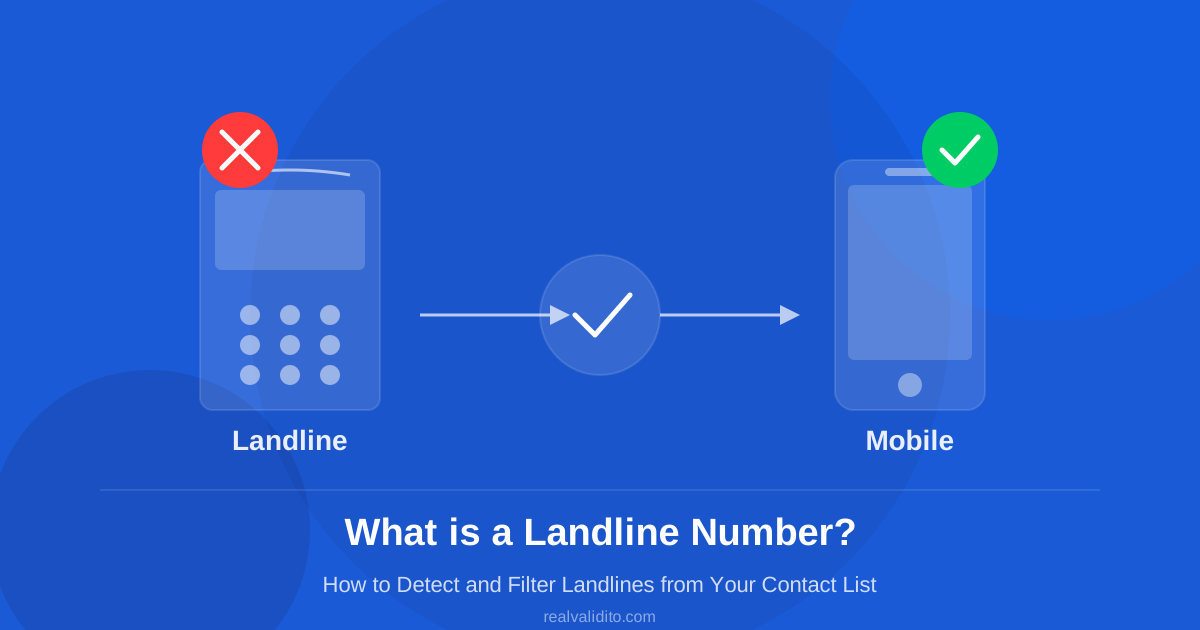
If you’re running an SMS campaign or building a phone outreach list, landline numbers are a silent drain on your budget and deliverability. Sending an SMS to a landline is not just wasteful — it can also hurt your sender reputation.
In this guide, we’ll explain what a landline number is, how it differs from a mobile number, why filtering landlines matters, and how to detect them automatically using a line type lookup API.
What is a Landline Number?
A landline number is a telephone number connected to a physical, fixed location through a wired telephone network. Unlike mobile phones, landlines cannot receive SMS text messages in the traditional sense — they are tied to a specific address and transmit voice calls over copper wire or fiber-optic infrastructure.
Common examples of landline numbers include:
- Home telephone lines
- Office and business phone lines
- Hotel room phones
- Government and institutional lines
Landlines use the Public Switched Telephone Network (PSTN) and are assigned through local telephone exchanges. In the US and Canada, landline numbers look identical to mobile numbers — both use the standard 10-digit NANP format (e.g. 212-555-1234), which makes manual identification impossible without a lookup tool.
Landline vs Mobile: What’s the Difference?
| Feature | Landline | Mobile |
|---|---|---|
| Receives SMS | No (standard) | Yes |
| Tied to location | Yes | No |
| Can be ported | Yes (to VoIP) | Yes |
| TCPA consent required | Yes (calls) | Yes (calls + texts) |
| Detectable via API | Yes | Yes |
The key distinction for marketers is that landlines cannot receive standard SMS messages. If your contact list contains landline numbers and you run an SMS campaign, those messages will fail silently — you’ll pay for the send but the message will never be delivered.
Why Filtering Landlines Matters
1. SMS deliverability
Sending texts to landlines results in failed deliveries. Most SMS platforms charge per message sent, not per message delivered — meaning you’re paying for messages that go nowhere.
2. TCPA compliance
Under the Telephone Consumer Protection Act (TCPA), you must have prior express written consent before sending marketing texts to mobile numbers. Read our TCPA Compliance 2026 guide for a full breakdown of the rules. Knowing your number type helps you apply the right consent rules and avoid violations.
3. Campaign ROI
A clean, validated phone list with landlines removed will usually outperform an unvalidated list. Higher deliverability means better open rates, more conversions, and lower cost per contact.
4. Carrier reputation
Repeated failed SMS sends can damage your sender score with carriers like AT&T, Verizon, and T-Mobile, leading to filtering or blocking of your messages across your entire list. Use our Phone Carrier Lookup to verify carrier information before sending.
How to Detect Landline Numbers
The only reliable way to detect whether a number is a landline or mobile is through a line type lookup API. These APIs check frequently updated carrier data to return the current line type for any US or Canada phone number.
A line type lookup typically returns one of the following classifications:
- Mobile — can receive SMS
- Landline — cannot receive SMS
- VoIP — internet-based, may or may not receive SMS
- Toll-free — 800/888/877 numbers
- Unknown — number exists but type is unverifiable
RealValidito’s Phone Lookup API returns the line type along with the carrier name and Valid/Invalid status — giving you everything you need to make a routing decision in a single API call.
How to Filter Landlines from Your Contact List
Option 1: Real-time validation at point of entry
Integrate the RealValidito API into your web form or CRM. When a user submits their phone number, the API checks the line type instantly and rejects or flags landline numbers before they enter your database. See our API documentation for integration details.
Option 2: Bulk validation via CSV upload
If you have an existing contact list, upload it as a CSV file to RealValidito’s bulk validation tool. The system will process all numbers and return a cleaned file with line type, carrier, and status for each entry. You can then filter out landlines before your next campaign.
Option 3: API integration for ongoing list hygiene
Connect the RealValidito API to your marketing platform or CRM via webhook or batch job. Set up automated rules to flag or remove landline numbers as they’re added or updated in your system. Check our pricing page for credit packages.
What About VoIP Numbers?
VoIP (Voice over Internet Protocol) numbers are worth special attention. Unlike traditional landlines, some VoIP services do support SMS — but many do not. VoIP numbers are also commonly associated with higher fraud risk and are frequently used by bots and spam accounts.
Learn more in our dedicated guide: How to Detect VoIP Numbers: Line Type Lookup for SMS Compliance and Fraud Prevention.
RealValidito’s line type lookup distinguishes between landline and VoIP so you can apply separate rules for each. Many marketers choose to suppress both landlines and VoIP numbers from SMS campaigns for maximum deliverability and compliance.
Frequently Asked Questions
Can a landline number be converted to receive SMS?
Yes — through a process called SMS-enabling or text-enabling, some carriers allow landline numbers to receive SMS. However, this is not the default and requires the number owner to opt into the service. Without a lookup API, you cannot know whether a specific landline has been SMS-enabled.
How accurate is landline detection?
RealValidito Phone Lookup data is updated daily and reflects number porting. Accuracy is highest for numbers that haven’t been recently ported. See our Phone Carrier Lookup API post for more on porting detection.
Does filtering landlines affect my DNC compliance?
No — DNC compliance is separate from line type filtering. You should always scrub your list against the National DNC Registry and state registries regardless of line type. Read our guide on What is the Do Not Call Registry for more details.
How fast is the line type lookup API?
RealValidito typically returns line type data within 500 ms, making it suitable for real-time validation at the point of form submission.
Conclusion
Landline numbers are invisible to most marketers until they cause deliverability problems or compliance gaps. By adding a line type lookup step to your phone validation workflow, you can automatically detect and filter landlines before they cost you money or damage your sender reputation.
RealValidito’s Phone Lookup API makes it easy to detect landlines, mobiles, and VoIP numbers in real time — whether you’re validating a single number or processing a list of millions.
Start with 1,000 free Phone credits and 100 free DNC credits — no credit card required.