
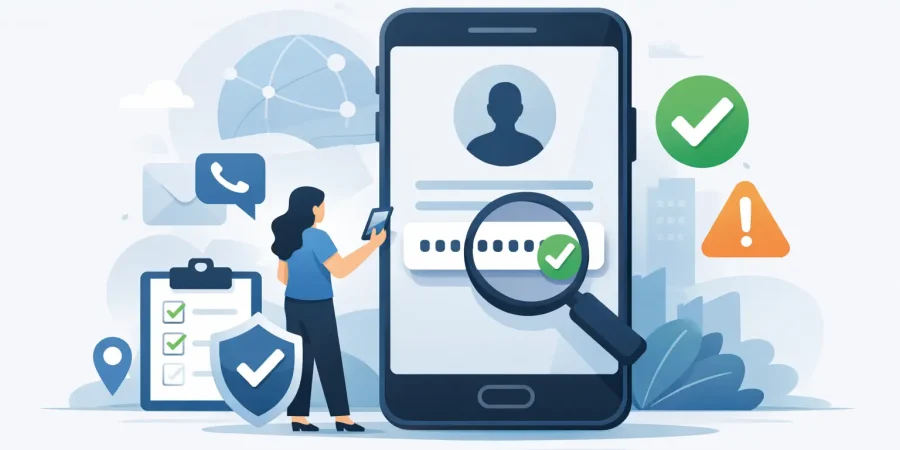
Bad phone data shows up fast in the metrics. SMS spend climbs, agents waste time on dead leads, campaigns underperform, and compliance risk gets harder to control. If you need to know how to validate phone numbers, the goal is not just to check formatting. You need to confirm whether a number is real, active, and appropriate for the way your business plans to use it.
For sales teams, marketers, call centers, and developers, phone validation is an operational filter. It protects outreach budgets, improves contact rates, and keeps bad records from spreading across your CRM, forms, and downstream systems. The right process is different for a web form than it is for a batch database cleanup, but the principles stay the same.
What phone validation should actually confirm
A surprising number of teams still treat validation like a simple syntax check. If a number has ten digits and the area code looks plausible, they mark it as good. That catches typos, but it does not answer the business questions that matter.
A useful validation workflow checks whether the number is structurally valid for the US or Canada, whether it is assigned, whether it is active, and what type of line it is. That last point matters more than many teams expect. A mobile number may be suitable for SMS, while a landline or VoIP number may need different treatment depending on your channel strategy and compliance rules.
Carrier and location data can also improve routing, segmentation, and fraud screening. If you are running outbound campaigns, DNC screening adds another layer because a valid phone number is not automatically a callable one. Validation and compliance are related, but they are not the same step.
How to validate phone numbers in practice
There are three common levels of validation, and most businesses need more than the first.
The first is format validation. This checks basic structure, length, and country pattern. It is useful at the point of entry because it stops obvious junk data before it enters your system. Still, format validation alone cannot tell you if the number is in service.
The second is real-time lookup. This is where an API checks the number against frequently refreshed carrier and numbering data (RealValidito Phone Lookup data is updated daily) to determine whether the number is valid and active, along with details such as line type, carrier, and location. This is the standard most businesses should aim for when accuracy affects messaging costs, conversion rates, or outreach risk.
The third is workflow validation. This combines lookup results with business logic. For example, your form may accept only US and Canada mobile numbers for SMS signup. Your CRM may route landlines to voice teams, suppress inactive numbers, and flag records that require DNC review before dialing. This is where validation starts producing measurable operational value.
Point-of-entry validation prevents expensive cleanup later
If your lead form accepts bad numbers, your database quality starts declining immediately. Teams often try to fix this later with periodic scrubs, but by then the damage has already spread into campaigns, automations, and sales queues.
Real-time validation at the form, signup flow, or CRM entry point is usually the highest-return place to start. It blocks fake submissions, catches input errors, and verifies whether the number is usable before it becomes part of your sales or marketing process. For lead generation businesses, this is especially important because bad phone data creates a direct cost every time it is sold, routed, or worked by an agent.
There is a trade-off, though. If your form is too strict, you may create friction for legitimate users. The better approach is to validate silently where possible, use clear error prompts when needed, and only reject entries that are clearly invalid or outside your use policy.
What developers should build into validation flows
Developers usually need a fast API response, consistent JSON output, and logic that is easy to apply in production. In practice, that means normalizing the number first, sending it to a validation endpoint, then using the result to decide whether to accept, reject, enrich, or route the record.
Sub-second response times matter on public forms because slow validation hurts completion rates. Clean response fields also matter because teams often need to pass results into multiple systems at once, including CRMs, dialers, suppression tools, and analytics platforms.
If you support both the US and Canada, your validation logic should be explicit about geographic scope. A process built for North American numbering can be very accurate in that environment, but it should not pretend to support countries outside its data coverage.
Bulk validation is the right move for aging databases
If you already have thousands or millions of records, real-time entry checks are not enough. You also need batch validation to identify invalid, inactive, or misclassified numbers sitting in your CRM.
This is where CSV upload or bulk API processing becomes practical. Instead of checking one number at a time, you can screen an entire file, return structured results, and then decide what to do with each segment. Invalid or inactive numbers can be removed. Landlines can be separated from mobile contacts. VoIP numbers can be reviewed based on your fraud or messaging policy. Numbers needing DNC screening can be pushed into a compliance workflow.
A full cleanup usually pays for itself quickly when your outbound volume is high. Lower dial waste, fewer failed SMS sends, better agent productivity, and cleaner campaign reporting all show up after the first pass. The main variable is how often you should repeat the process. High-churn databases may need frequent revalidation because phone status changes over time.
Why line type and carrier data matter
Many teams ask whether a phone number is valid, but the better question is whether it is valid for a specific use case. A number can be technically valid and still perform poorly in your workflow.
Line type helps you decide how to contact someone. If the number is mobile, SMS may be appropriate if consent is in place. If it is landline, voice routing may make more sense. If it is VoIP, you may want additional review depending on your fraud controls, account verification policies, or campaign rules.
Carrier data can also support routing, deliverability analysis, and troubleshooting. If a messaging campaign underperforms with certain carriers, that pattern is easier to spot when your data is enriched from the start. Location details add another practical layer for local sales assignment, territory management, and regional marketing analysis.
Validation and compliance should work together
A clean number is not the same as a compliant number. That distinction matters for outbound calling and texting, especially under TCPA-related workflows.
If your team is calling or texting at scale, validation should sit alongside DNC screening and consent management. One step confirms whether the number is valid and what kind of line it is. Another step helps determine whether outreach is permitted. Skipping either side creates risk. A business that validates numbers without applying compliance logic can still expose itself to avoidable complaints, wasted effort, and brand damage.
This is one reason many teams prefer a platform that supports validation and compliance-related checks in the same operational flow. It reduces handoffs, speeds up decision-making, and keeps sales and marketing systems aligned.
Common mistakes that reduce validation accuracy
The biggest mistake is relying only on regex or formatting rules. That may clean up appearances, but it does not verify service status. Another common issue is validating once and assuming the result stays true forever. Numbers are reassigned, deactivated, or ported, so stale validation becomes less useful over time.
Teams also run into trouble when they fail to match validation rules to the channel. A number that works for voice may not belong in an SMS campaign. A technically valid number may still need suppression for legal or policy reasons. The closer your logic reflects real usage, the more value you get from validation.
Finally, some businesses overcomplicate the first rollout. You do not need a perfect enterprise-wide data governance project on day one. Start where bad phone data hurts most — usually lead capture, outbound messaging, or CRM hygiene — then expand from there.
Choosing a validation approach that fits your workflow
If your biggest problem is junk leads, start with point-of-entry API validation. If your CRM is already full of questionable records, begin with bulk processing. If compliance exposure is part of the issue, make sure validation is paired with DNC screening and clear outreach rules.
For technical teams, the deciding factors are usually response speed, coverage, integration simplicity, and output quality. For business operators, the practical questions are even simpler: Will this reduce wasted spend, improve contact rates, and keep our data usable across systems?
That is the standard to use. A phone validation process should not just tell you whether a number looks right. It should help you decide what to do next, fast. Tools like RealValidito are built around that reality, giving teams a way to validate, enrich, and screen numbers in real time or in bulk without adding friction to the workflow.
The best phone validation setup is the one your team will actually use every day — quietly in forms, reliably in CRMs, and consistently wherever bad data costs money.